
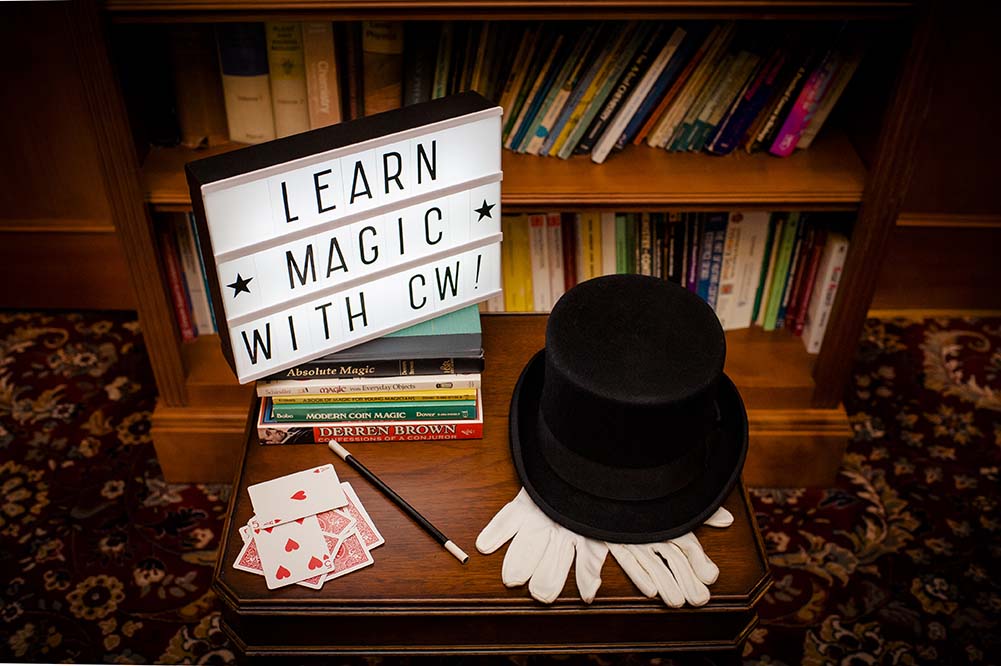
From Child’s Play to Confidence Building – The Deeper Value of Magic Lessons
Magic might look like pure entertainment – a flash of cards, a vanished coin, a moment of surprise. But beneath the mystery lies something far more powerful. Structured magic lessons can actually be the secret to developing your child’s interpersonal skills in a way that feels fun and natural!
Why Today’s Parents Are Looking Beyond Traditional Activities
Today’s parents are increasingly moving away from traditional activities like sports or music lessons to provide their kids with more interesting experiences. And while football and piano are brilliant and beneficial, parents are also looking for unique and enriching activities that help their child to stand out rather than fit in.
As a parent of young children or teenagers, you might also be looking to reduce their screen time or prevent it altogether by enrolling them in fun in-person activities. From cooking classes and magic lessons to arts and crafts or book clubs, there are many ways your kids can spend time with their peers, learn something new and even develop life skills. For instance, magic classes blend creativity, performance, psychology and communication all in one discipline.
The Hidden Skills Behind Every Magic Trick
Magic lessons are far more than learning how to “do a trick”. Behind every performance sits a set of powerful developmental skills that studies have shown can quietly build confidence, creativity and cognitive strength.
Here’s what’s really happening when you enrol your child in magic lessons.
Confidence and Stage Presence
Speaking clearly
Performing a magic trick requires confidence. So children quickly learn that if they mumble, rush or hesitate, the trick loses the desired impact. This naturally encourages stronger articulation and vocal projection. Research from a Hertfordshire-based study by ScienceDaily found that after just a single magic lesson, pupils aged 10-12 showed significant increases in confidence compared to a standard self-esteem lesson. This shows that the act of performing magic creates an immediate boost in self-assurance, enabling your child to hold their own.
Holding eye contact
Magic relies on connection with the crowd. Young magicians must look at their audience to build trust, guide attention and strengthen their performance. Eye contact becomes purposeful rather than intimidating. Over time, this reduces social anxiety and builds interpersonal skills which proves to be especially valuable for children who may struggle during school presentations or simply answering questions in class.
Managing nerves
Standing in front of others – even family – can feel daunting. Magic lessons provide a structured, repeatable routine, which gives children a psychological safety net. Because they know the method, they feel more in control. The same Hertfordshire study found magic to be more effective at increasing sociability and confidence than traditional self-esteem activities. This signifies its role in helping children manage performance nerves in a supported way.
Commanding attention
Magic requires a stage presence. Children learn how to pause, build suspense and direct focus – skills that translate directly into leadership and public speaking. The performer becomes the centre of attention in a positive, controlled way, which can be transformative for quieter children.
Cognitive Development
Memory training
Every magic routine depends on carrying out steps, scripts and sleights in precise order. This repeated rehearsal strengthens your child’s working memory as they must remember instructions under mild pressure, improving retention and recall – essential skills for excelling in a school setting.
Sequencing and structure
Magic tricks follow a clear formula: setup, build-up, climax and reveal. Learning this structure enhances a child’s understanding of sequencing – a core executive functioning skill linked to academic success. Performing magic requires your child to follow steps accurately and in order, reinforcing disciplined thinking.
Strategic thinking
Magicians must think ahead. They anticipate audience reactions, plan misdirection and adjust pacing accordingly. A study published in the US National Library of Medicine (2021) found that children aged 10-11 who participated in a magic-based activity showed significantly greater improvements in divergent thinking (both fluency and originality on Guilford’s Alternate Uses Test) compared to an art-based activity. This suggests that magic uniquely stimulates flexible, creative problem-solving – a key element of strategic thought.
Problem-solving
When a trick doesn’t work perfectly, children must adapt quickly. They learn resilience and creative recovery. The same 2021 study demonstrated that engaging with magic boosted creative output, indicating that figuring out methods and adapting performance strengthens innovative thinking skills.
Communication and Social Skills
Storytelling
Magic is similar to film or theatre in that the storytelling aspect must shine. A trick without a story feels ordinary but with a story, it becomes memorable. Children learn how to frame an effect with narrative, humour or suspense, strengthening their expressive language and imagination.
Reading reactions
Successful magicians constantly observe their audience. Are they confused? Suspicious? Or amazed? This builds emotional intelligence and social awareness. Children learn to interpret facial expressions and body language in real time, building their interpersonal communication skills.
Adapting delivery
A performance for parents or siblings differs from one for classmates. Magic teaches flexibility and how to adjust tone, pace and complexity depending on who is watching. This adaptability is a powerful social skill that supports confidence in many different environments.
Engaging different audiences
Magic invites participation, laughter and surprise. The Hertfordshire study reported increased sociability following magic sessions, with researchers noting improvements in both confidence and social skills after even one lesson. By giving children a “social tool” they can share, magic naturally encourages peer interaction.
Further research from the University of Alabama at Birmingham found that children with ADHD who attended a structured magic camp showed significantly higher self-esteem after the programme. Parents also reported noticeable improvements in psychological wellbeing. This suggests magic can be especially powerful for children who may not thrive in conventional performance or academic settings.
What to Expect From CW Magic Lessons
- Professional magician-led training
- Bespoke or small-group options
- Focus on performance and skills, not just tricks
- Premium experience aligned with high standards parents expect
Feedback From Parents
“Thank you so much for coming today to teach Gabi your magic.He absolutely loved the session and hasn’t stopped talking about it since you left. You were patient, engaging, and made it really special for him. Thanks again!”
Maya
“Just wanted to say again that we are so pleased we booked the time with you for Danny. I’m not sure we have ever seen him so happy after doing something…he absolutely loved it. It was perfect. Thank you so much for doing a fantastic job and creating a memory he and we will never forget.”
Derrick and Lisa
“What a fantastic, unique gift idea! Our son received an online 1-1 session with Christopher for his 11th birthday. We weren’t sure what to expect but all I can say is our son LOVED IT and has even asked if he can have another session as a Christmas present. He couldn’t wait to show off his new tricks. Thank you!”
Anna Buckman
More Than Just Magic
Chris is a professional magician who has performed across the UK and internationally. He’ll teach your son or daughter real magic that goes beyond party tricks or anything you can find on YouTube.
But besides learning magic tricks from an expert, Chris strives to instill a sense of confidence, creativity and invoke a sense of wonder.
At CW Magic, our magic students learn to own a room, believe in themselves and go away with something remarkable to share with friends and family.
Ready to see the benefits of magic lessons for your child?
If you’d like to enroll them, fill in the form on this page or book a call with Chris.

1 Mar 2026
Latest Blogs

Celebrity Clientele






Menu
Get In Touch
chris@cwmagic.co.uk
Hertfordshire, UK
07747 141 238
Dubai, UAE
+971 056 459 0284


Stay Updated
© 2026 CW Magic – Christopher Whitelock Magician - All Rights Reserved | Website designed and developed by Cariad Marketing